The complete flow, from conversation to finished piece
One platform connecting brief, design, revision and production.
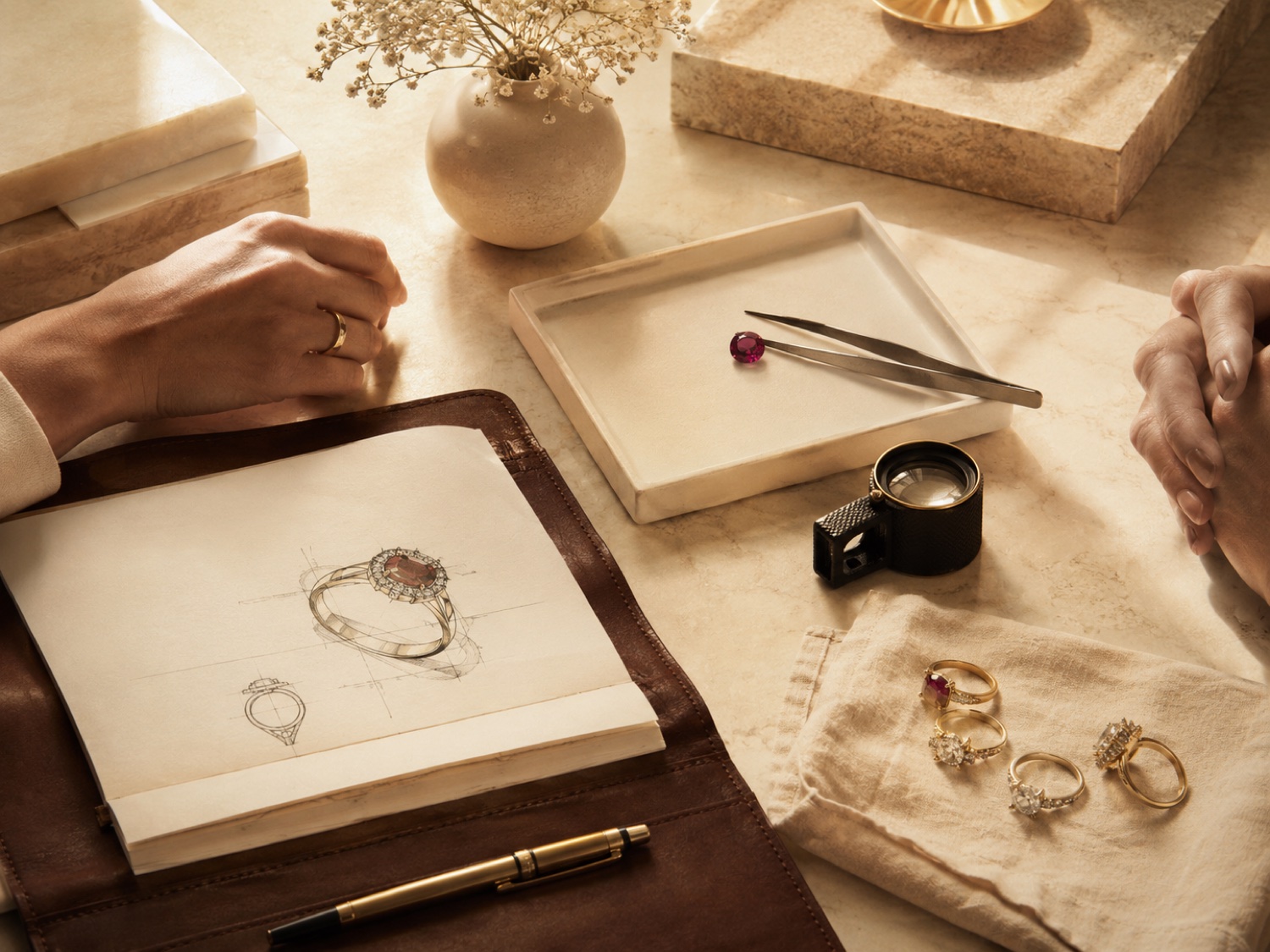
Converse
The brief takes shape face to face: style, stones, budget, occasion.
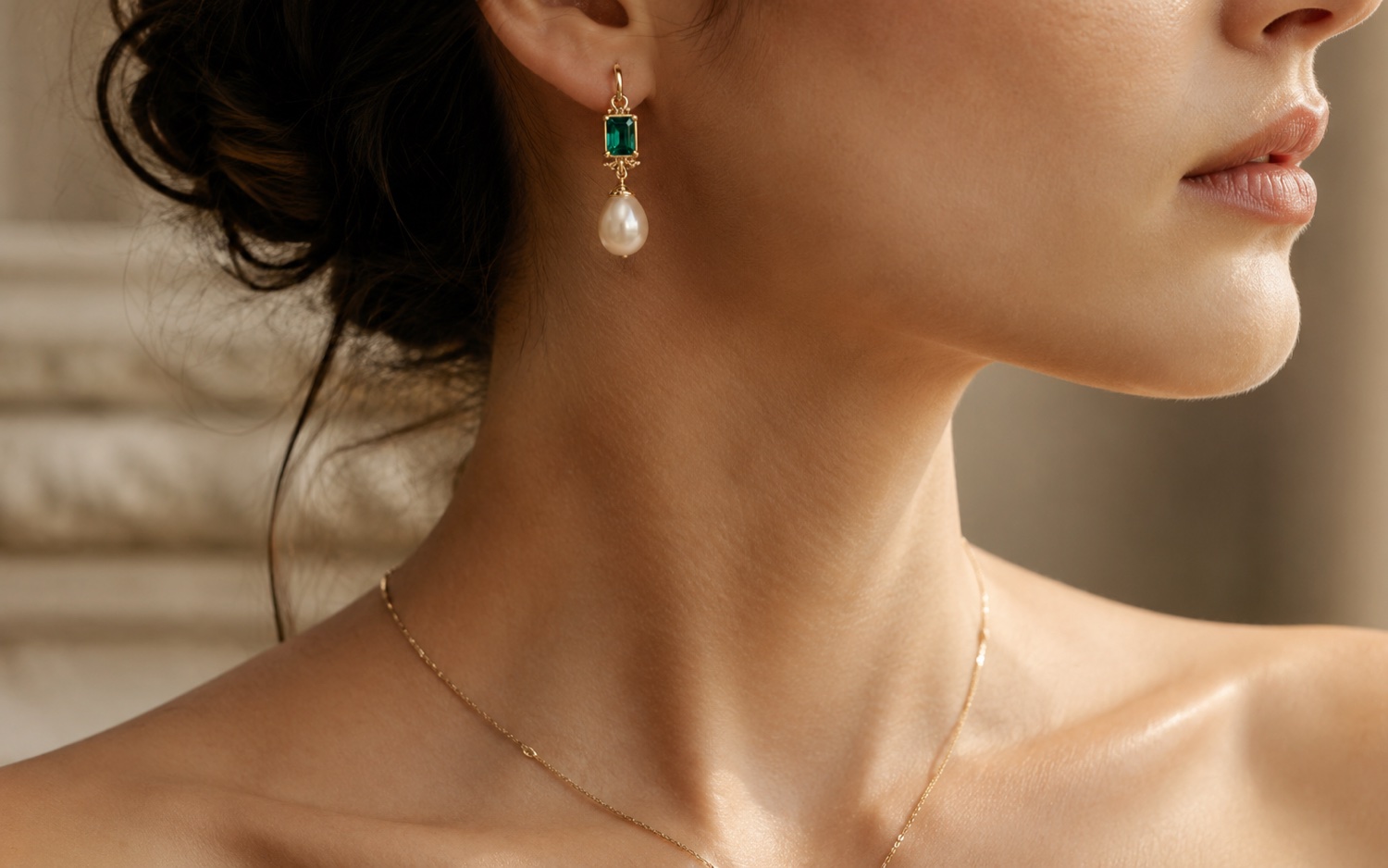
Instant renders
Finished renders and on-model views, generated live for the client to compare.
Revise in real time
Swap stones, colours and styles instantly; the design is settled within the conversation.
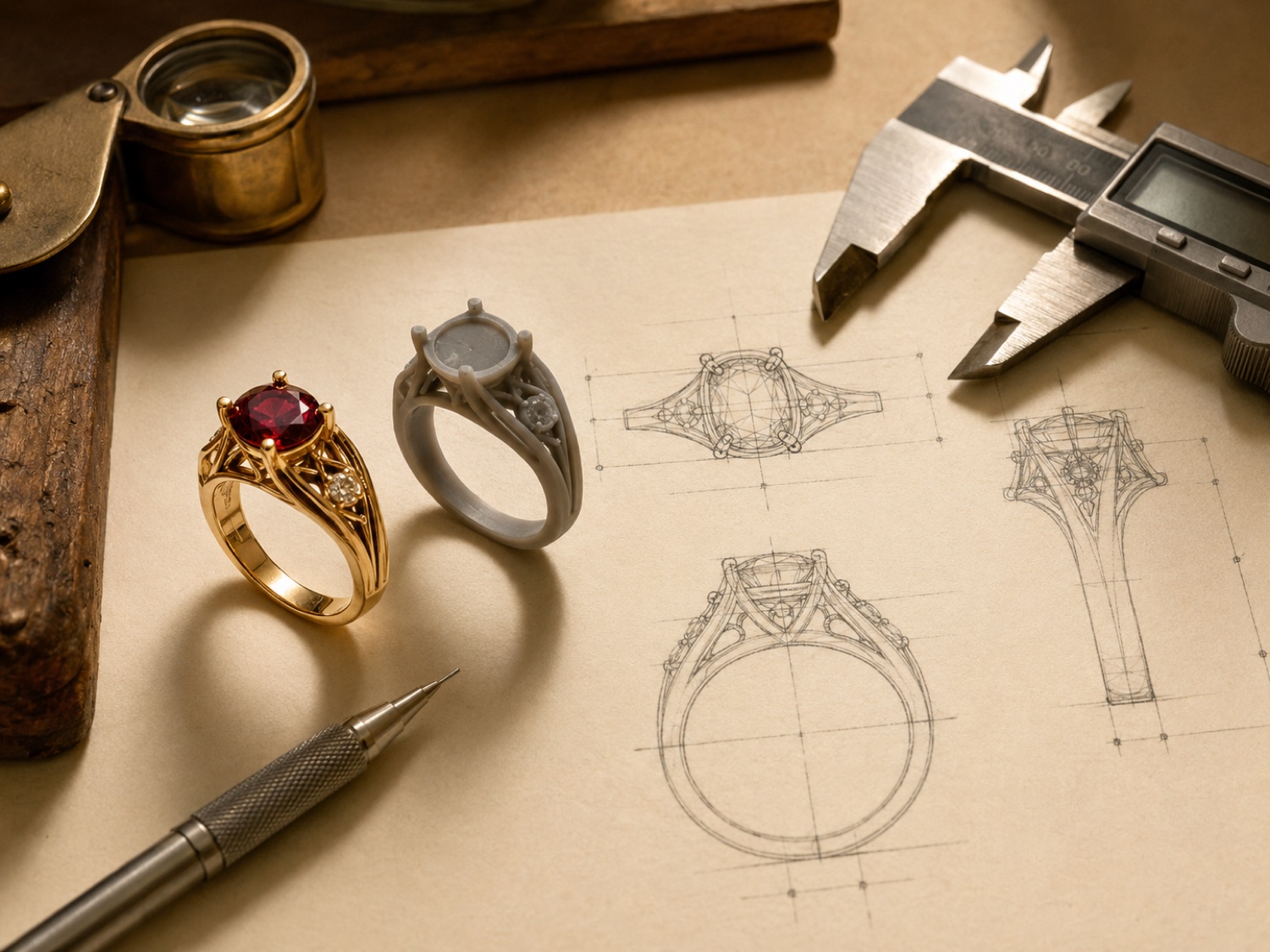
Export production files
Once confirmed, export 3D production files straight to your production engineers.
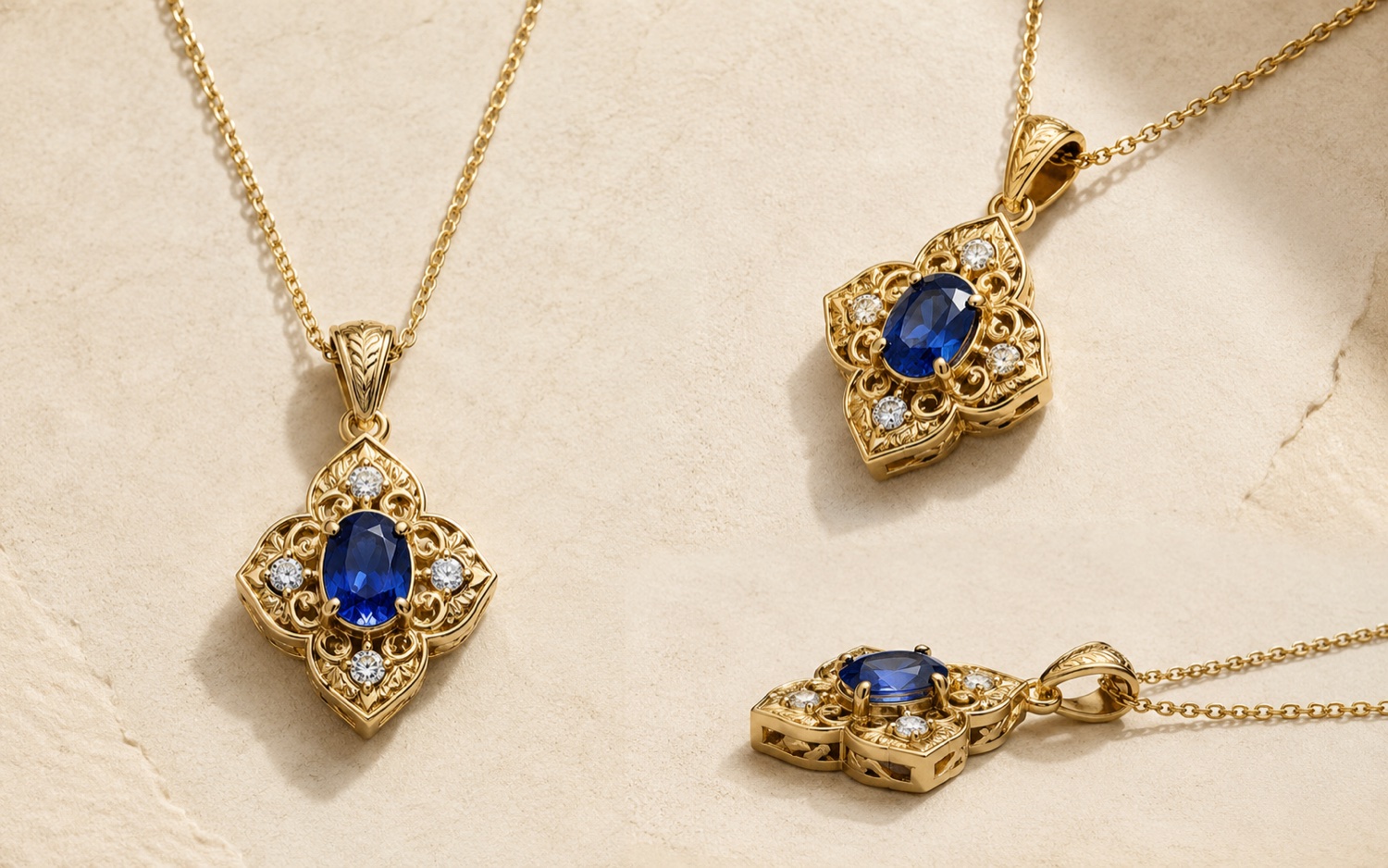
A gallery from one engine
Rings, necklaces, earrings: one engine, one style, every piece producible.
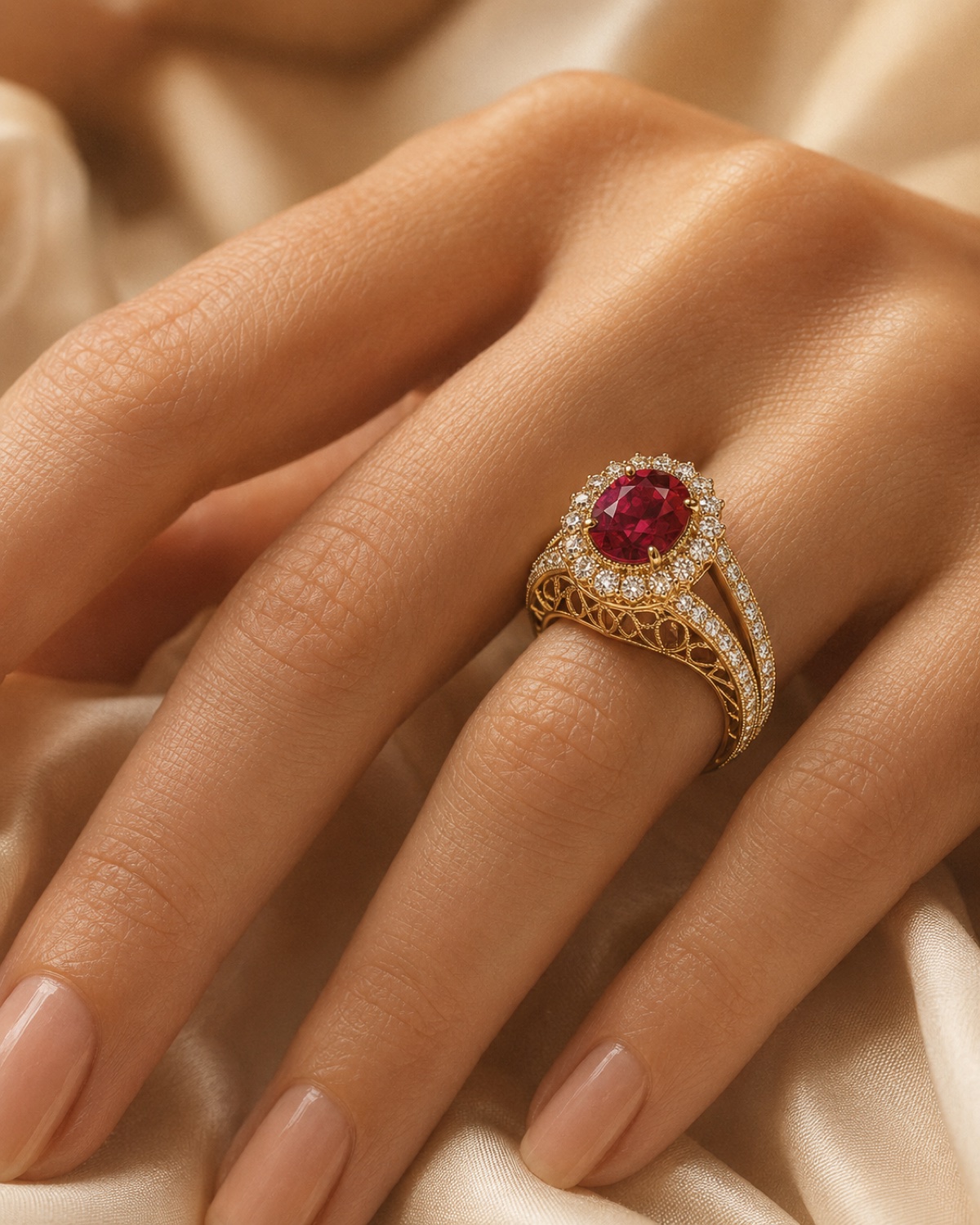


One design, one specification
On mulapis a design is not a picture but a specification: metal, stones, dimensions and quotation, carried from first sketch to finished piece.
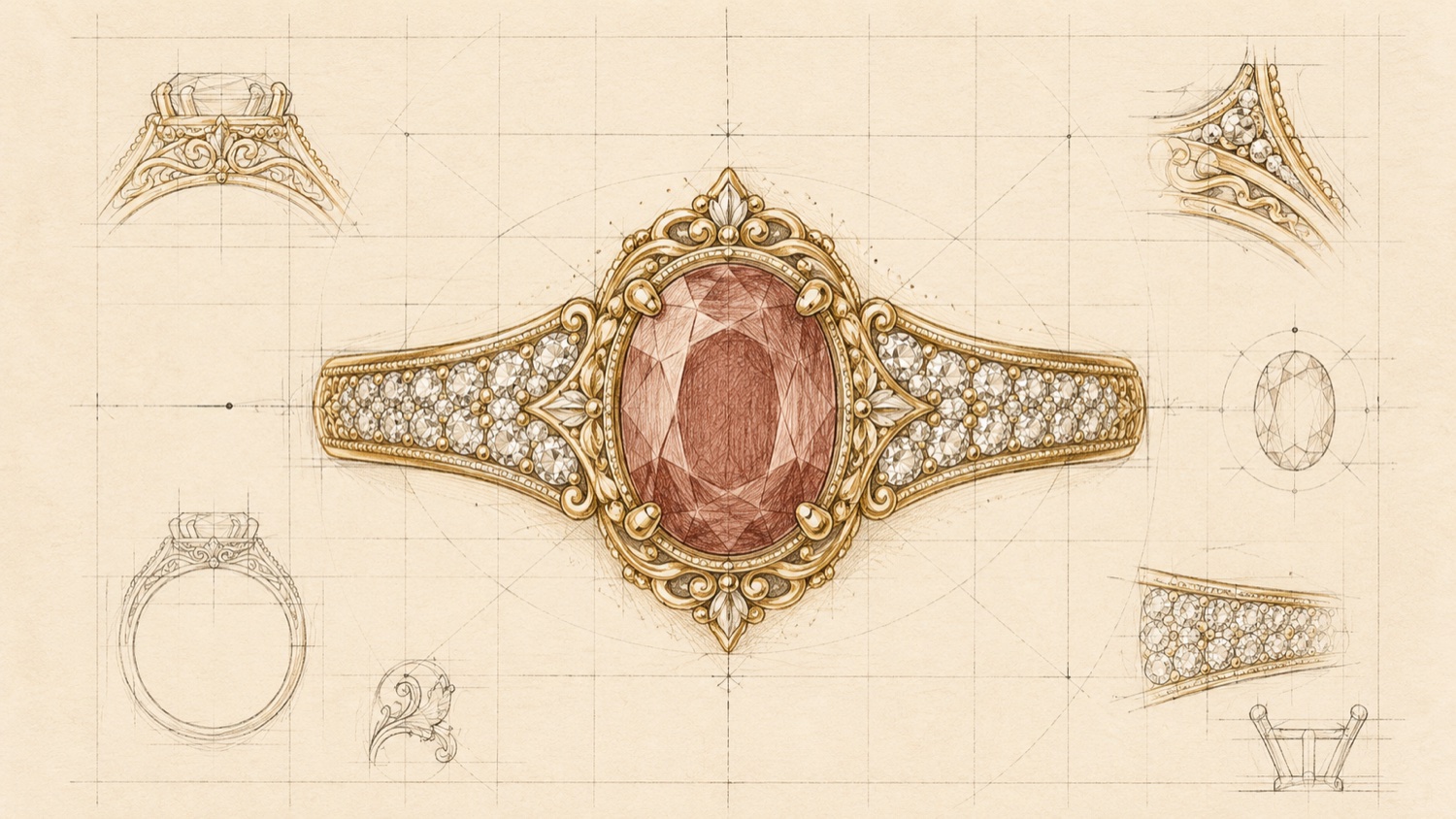 Sketch
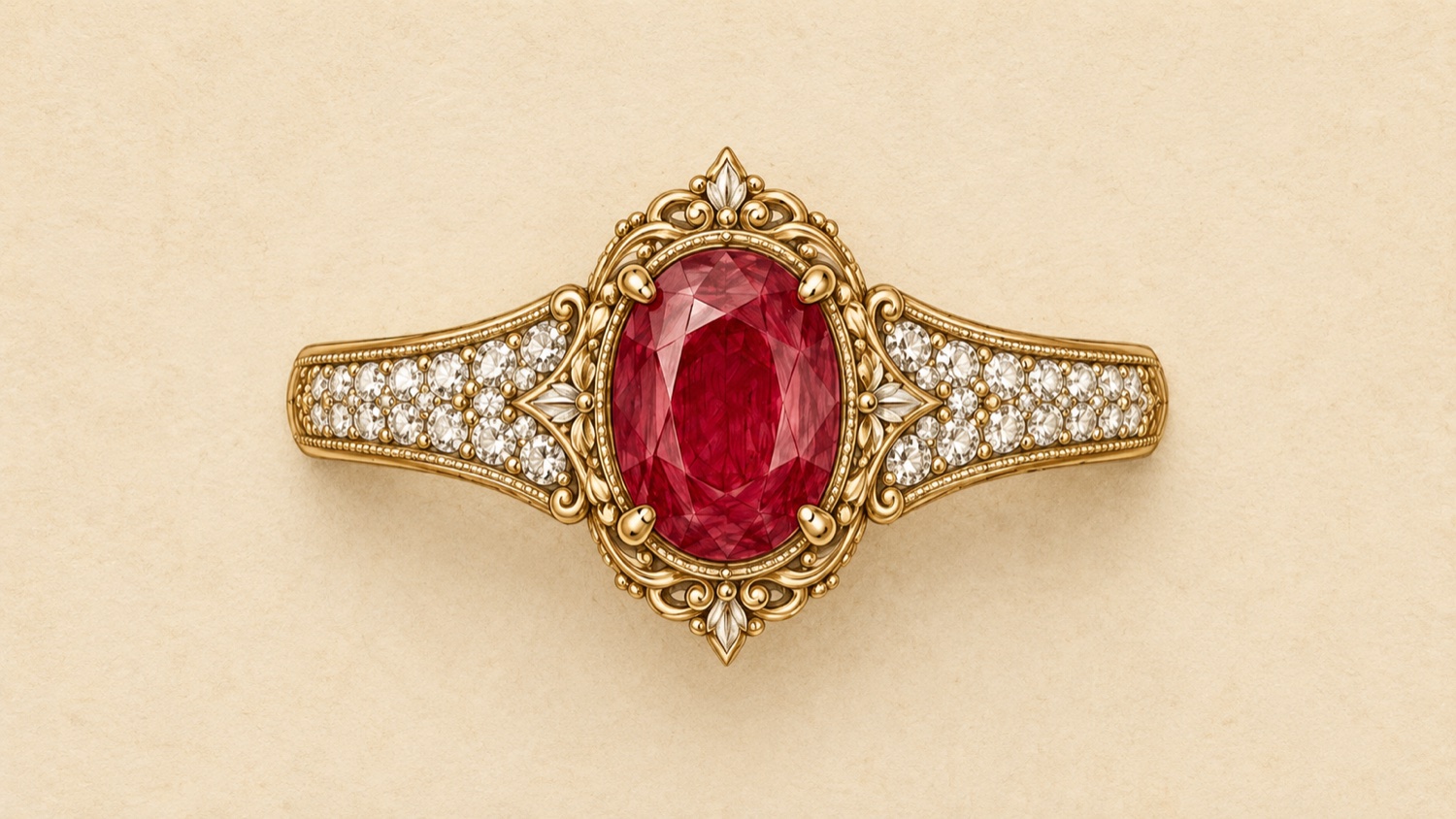 3D render
Only designs that can be made
Generation is constrained by manufacturing specifications; designs that fall outside them are automatically redone. Everything that reaches you can go straight to production.
What users ask most
- Can the generated designs really go straight to production?
- Yes. Every design is generated under manufacturing constraints and validated item by item in specification review: prong load paths, dimension chains, mold release, wall thickness, setting choice. Designs that fail are automatically redone, and every piece that reaches you carries a full spec, ready to hand to the workshop.
- What 3D file formats do you export? Do you support standard CAD tools?
- We export four industry-standard formats: STL, OBJ, 3DM (native Rhino/MatrixGold format), and STEP. Watertight, manifold STL/OBJ exports first for immediate 3D resin print validation, followed by casting-ready 3DM/STEP files that import seamlessly into your workshop CAD/CAM workflow.
- Where does 3D file delivery stand in production today?
- We execute a disciplined two-stage delivery: Stage 1 is the '3D Print Physical Validation' (STL/OBJ), exportable the same day a design is locked to print a resin master for finger-fit, prong inspection, and stone balance. Stage 2 provides 'Casting-Ready CAD Masters' (3DM/STEP) with geometry-derived gold weights and standard metal shrinkage allowances, ready for investment casting with zero remodeling from scratch.
- Why is physical 3D print validation prioritized first?
- Because resin 3D printing is the fastest, lowest-risk trial loop in jewelry. Directly cutting rubber molds or milling metal when a ring size or prong depth is slightly off costs hundreds of dollars and weeks of rework. Holding a physical resin sample on the finger on day one lets the client and goldsmith confirm ergonomics before casting begins, eliminating over 90% of structural surprises.
- How is the geometric gold weight calculated? Is it accurate?
- mulapis calculates gold weight directly from the watertight 3D solid geometry volume (cm³) multiplied by physical alloy densities (e.g., 18k gold at 15.58 g/cm³, Pt950 at 21.45 g/cm³). In an era of record gold prices, transparent, volume-derived estimates give bespoke jewelers and clients clear budget certainty before production begins.
- What if the client wants changes?
- Revisions are instant and local: resize the band, keep the stone; swap the side stones, keep the shank. Changes are carried by the specification, not by regenerating a new picture.
- Which jewelry types are supported?
- Rings, necklaces, and earrings, built with one engine and verified by one specification standard.
- How do I get started?
- mulapis is currently in early access, with priority for professional users and workshops. Leave your work email and invitations will follow in order.
Be among the first users on mulapis
Early invitations are reserved for jewelry designers, bespoke brands, and workshops. Leave your work email, and we will send invitations in order.